
Support the doctor
Make expectations visible, feedback useful and preparation realistic around clinical and family life.
National conference presentation
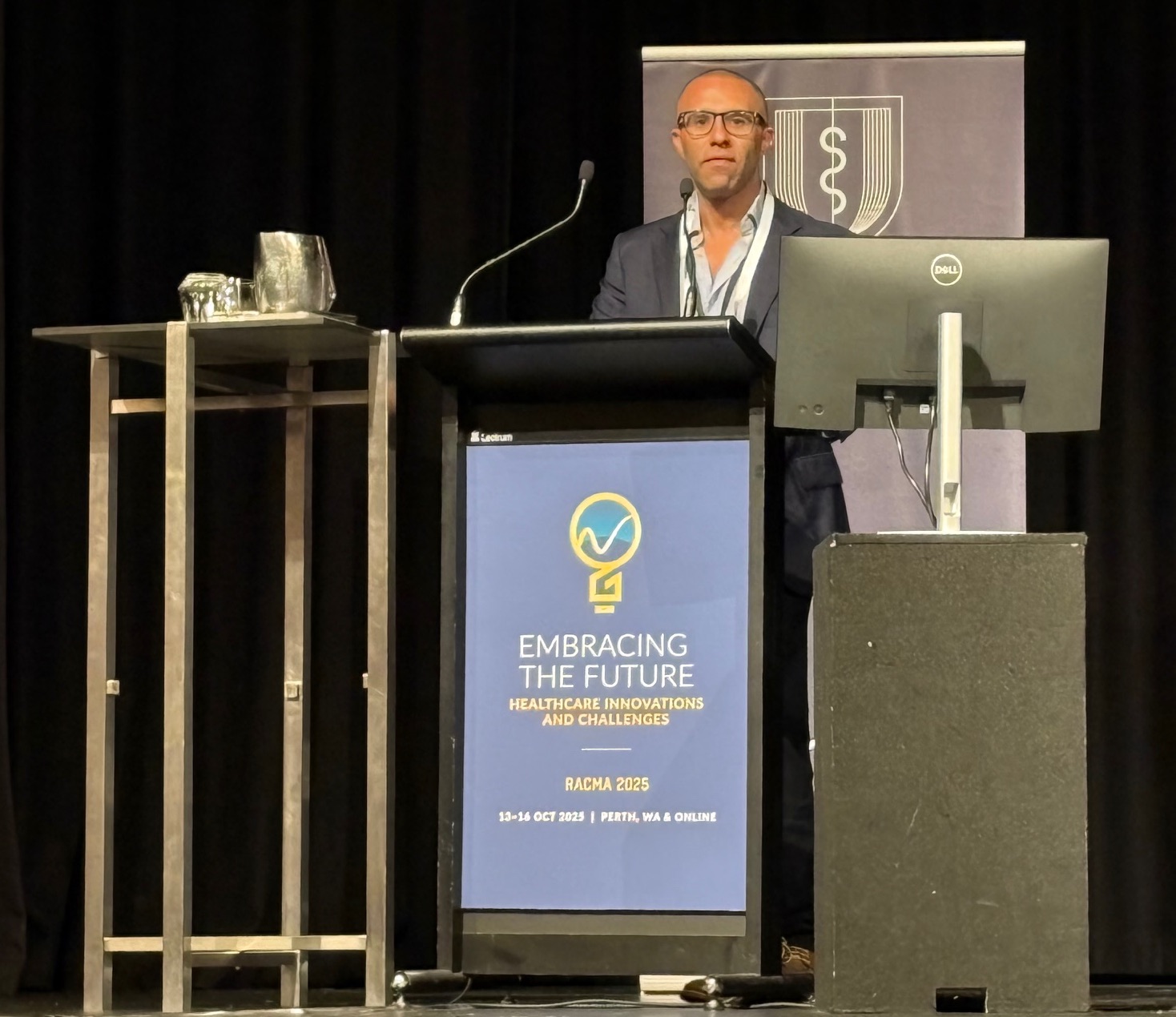
In a session co-chaired by RACMA and AIDH, A/Prof George Eskander presented on artificial intelligence, medical education and the health-workforce systems needed to help doctors thrive.
Medical leadershipEducation reformDigital health
Leadership through better systems
The presentation explored how examiner-led teaching, predictive analytics and intelligent learning systems can help make medical preparation more accessible and consistent, particularly for doctors moving between countries or working in rural and remote communities.
High-stakes examinations affect careers, families and the communities waiting for medical care. Better preparation is therefore more than an educational question - it is part of workforce design.
PassGP's contribution focused on practical ways to extend experienced teaching while keeping clinical judgement, personal feedback and the doctor's wellbeing at the centre.
Academic and executive context
George's work spans senior clinical operations, medical regulation, university education and national assessment. That combination allows digital innovation to be considered through the realities of both the doctor and the system.
Conference themes
The discussion connected everyday educational design with larger questions of leadership, access and sustainable healthcare reform.
Make expectations visible, feedback useful and preparation realistic around clinical and family life.
Help experienced doctors demonstrate their capability and progress through professional pathways with greater clarity.
Use technology to widen access to high-quality teaching without reducing education to automated content delivery.
At the RACMA National Conference 2025, A/Prof George Eskander discussed artificial intelligence, medical education and health-workforce systems in a session co-chaired by RACMA and AIDH.
The presentation connected individual examination preparation with workforce design. It explored how examiner-led teaching, predictive analytics and intelligent learning systems could improve access and consistency while keeping clinical judgement, personal feedback and doctors’ wellbeing central.
The presentation gives particular attention to doctors moving between countries and those working in rural and remote communities. It explores how experienced teaching can be made more accessible and consistent for these doctors through examiner-led education and intelligent learning systems.
It also recognises that high-stakes examinations affect careers, families and the communities waiting for medical care. The practical priorities are clearer expectations, useful feedback and preparation that is realistic around clinical and family life, with the doctor’s wellbeing remaining part of the discussion.
The presentation groups its themes around supporting the doctor, strengthening the workforce and designing for scale. Supporting the doctor means making expectations visible, feedback useful and preparation realistic alongside clinical work and family life. Strengthening the workforce means helping experienced doctors demonstrate their capability and navigate professional pathways with greater clarity.
Designing for scale means using technology to widen access to high-quality teaching without reducing education to automated content delivery. These themes link everyday choices about teaching and examination preparation with broader questions of leadership, access and sustainable healthcare reform.
The presentation considers predictive analytics and intelligent learning systems as ways to extend experienced, examiner-led teaching. Its emphasis is on using technology to make learning expectations clearer while retaining clinical judgement and personal feedback, rather than reducing education to automated content delivery.
For the speaker’s background, follow the RACMA speaker profile, Curtin University academic profile or PassGP biography. His work spans senior clinical operations, medical regulation, university education and national assessment, providing context for the presentation’s education and health-system themes.
The page also links to the related AIDH Digital Health Summit presentation and the PassGP conference update.
Sick of second guessing what the examiner wants? Hear from our Chief Examiner, A/Prof Eskander, as he explains how to display perfect exam technique for the CCE and not run out of time.